BUY IT FOR LIFE: The Boot Autopsy
The bandsaw blade is the only honest critic left in the outdoor industry. It has no brand loyalty, it ignores heritage marketing campaigns, and it slices through "eco-friendly" buzzwords to reveal the only metric that actually matters: structural density.
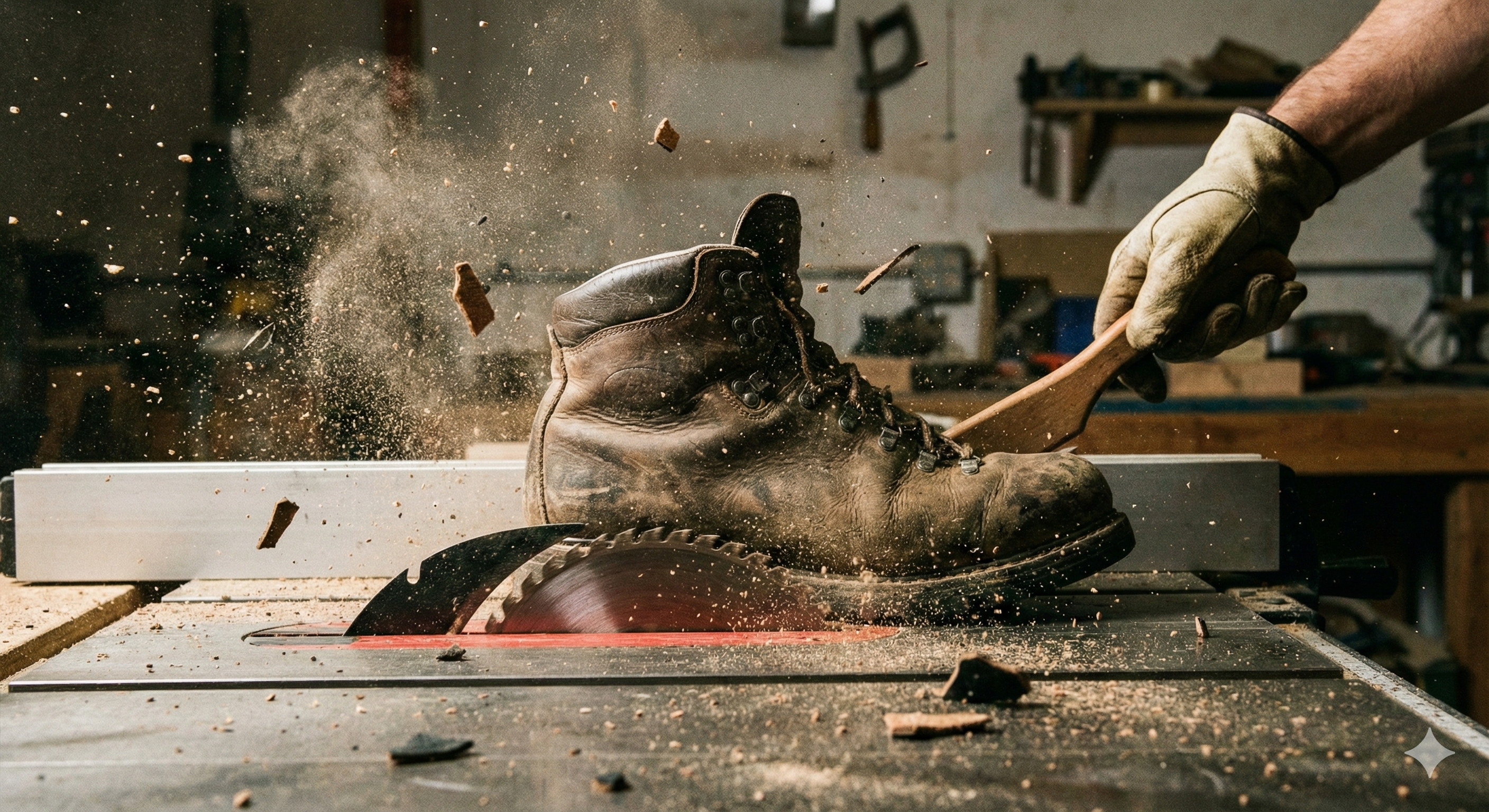
To help "Gap-Year Gabe" avoid the poverty trap of buying cheap gear twice, I purchased three tiers of hiking boots and fed them through a commercial saw. We are looking for the mechanical bond–the engineering choice that determines if a boot is a lifelong tool or merely a disposable wrapper for your foot.
Here is the cross-section of your financial future.
The Anatomy: Synthetic mesh, generic rubber, and "plush" foam padding. The Incision: The saw met zero resistance. Inside, we found Cemented Construction in its cheapest form. The Analysis: There is no stitching here. The upper is bonded to the sole with a heat-activated adhesive film less than a millimeter thick. In engineering terms, this is a "catastrophic failure timer." The Failure Point: Glue suffers from hydrolysis. Moisture and humidity chemically unzip the bond. If you hike in the tropics or step in a puddle, you are accelerating this decay. Once the "talking sole" separates at the toe, field repair is impossible. The Verdict: Landfill fodder. You are renting this boot for six months.
 BUY IT FOR LIFE
Specimen B: The Mid-Range Technical
The Anatomy: This is the danger zone. It features trusted components like Gore-Tex waterproofing and Vibram rubber outsoles. The Incision: A cleaner cut, revealing complex layers of technical foam. The Analysis: Even reputable brands like Salomon –which I respect for their agility–often rely on this architecture for their lighter models. The cross-section reveals that despite the high-end materials, the chassis is still cemented. The Failure Point: The weak link is the EVA (Ethylene Vinyl Acetate) midsole. It is essentially frothed plastic full of air bubbles. Over 500 miles of load-bearing, those bubbles burst. The cushion flattens, the shock absorption dies, and because the sole is glued on, you cannot replace it. The Verdict: A high-performance consumable. Great for speed, terrible for longevity.
Specimen C: The Heritage Heavyweight
The Anatomy: 2.5mm full-grain leather and a cork footbed.
The Reference Standard: Think of the classic silhouettes from Red Wing Shoes or Danner. The Incision: The saw struggled. It hit steel. The Analysis: We found the Goodyear Welt. This is a mechanical assembly where the upper is stitched to a "welt" rib, which is then stitched to the sole. The cross-section shows a literal thread locking the layers together, independent of glue. The Internal Environment: Instead of cheap EVA foam, these boots use a layer of granulated cork. Under heat and pressure, cork does not degrade; it cures. It molds to your bone structure, creating a custom orthotic that gets more comfortable in year five than year one. The ROI: This is a Resoleable Chassis. When you wear down the rubber tread, a cobbler cuts the thread, applies a new sole, and you keep the broken-in upper. The Math:
The Disposable Cycle: 5 pairs of cheap boots in 10 years = $325 + 5 plastic carcasses in the trash.The Heritage Cycle: 1 pair of welted boots + 2 resoles = $580. The Reality: You pay more upfront to stop paying later.
The In-Store Audit
Ignore the marketing copy on the box. Ignore the sales clerk’s pitch about "proprietary comfort technology." Your only job is to inspect the chassis. Pick up the boot and locate the welt–the stitching that connects the rubber sole to the leather upper. Dig your fingernail into the seam. If those stitches are just a texture molded into the rubber to look like thread, you are holding a disposable prop. Put it back. Real durability allows for repair. Do not buy a product that is designed to become garbage; invest in a machine that can be rebuilt.