The Art of Loitering: Three Weeks in a French Village
Why the most sustainable thing you can do is stay put.
The mist off the Vézère river tasted of damp limestone and woodsmoke, settling on my skin like a second history. It was Tuesday, or perhaps Wednesday. In the village of Saint-Léon-sur-Vézère, the church bells mark the hour, but the river marks the time.
For the first three days, my body vibrated with the phantom motion of a traveler addicted to "next". I checked train schedules for destinations I didn't need to visit and thumbed through guidebooks looking for the "must-sees." I felt the familiar itch of the bucket list—that anxiety that whispers, you are wasting your time.
But I wasn't here to see France. I was here to be in it.
We often talk about sustainability in terms of carbon: the flights we didn't take, the plastic we didn't use. But there is a quieter, equally vital metric: Attention. When we rush through a place, consuming its sights like fast food, we treat culture as a commodity. We extract the photo and leave nothing behind but exhaust.
I decided to run an experiment: I would spend three weeks in one village, adhering to a walking radius only. No car. No checklist. Just the radical act of loitering.
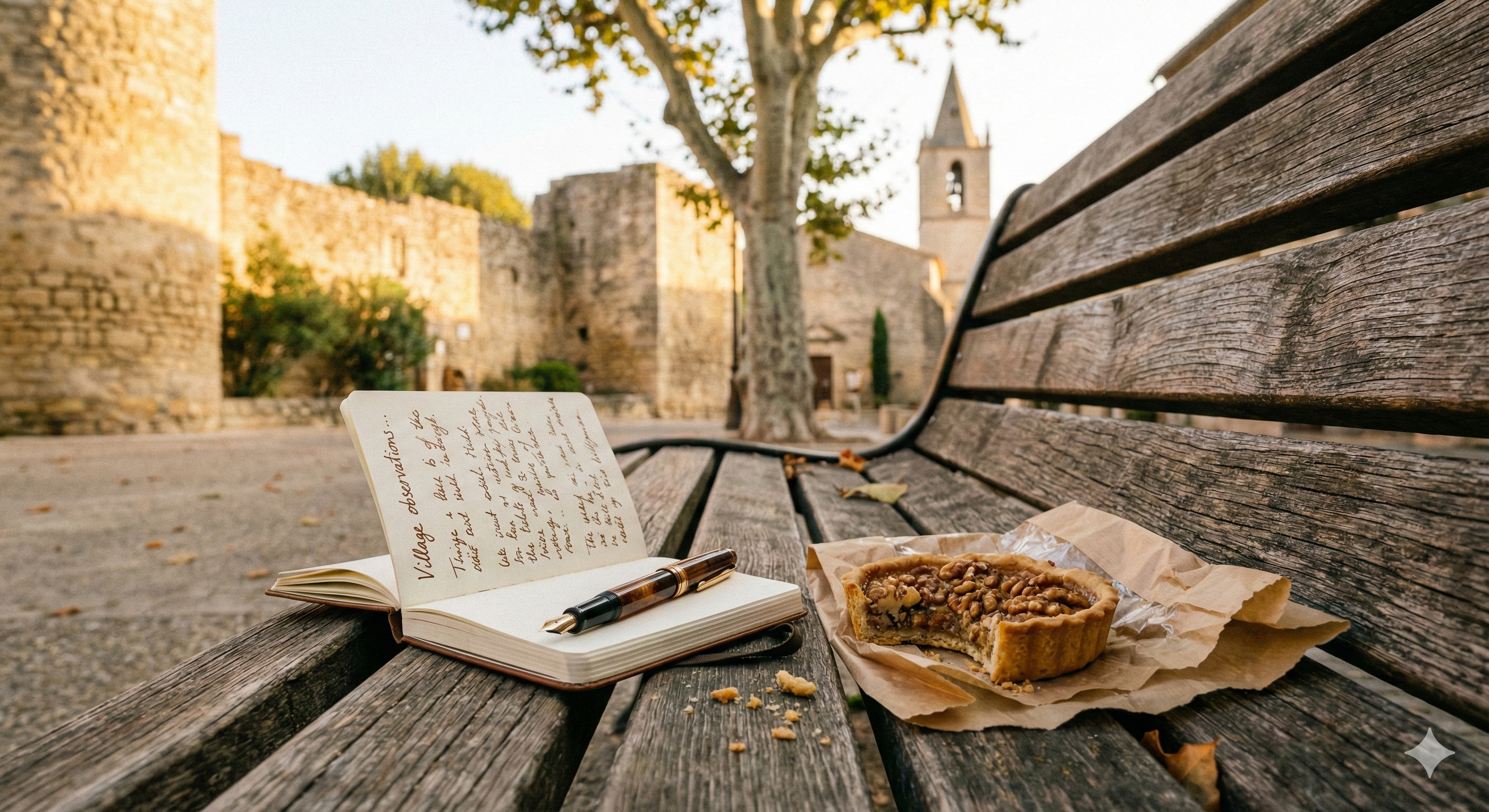 The Art Of Loitering
The Withdrawal
The first lesson of slow travel is that it is uncomfortable. Without the dopamine hit of a new landmark, you are left with yourself and the silence.
I sat on a stone wall near the bakery, watching the way the light hit the cobblestones at 8:00 AM versus 6:00 PM. I noticed the worn path where the school children cut across the grass—the "unspoken story" of the village's daily rhythm. I felt exposed; a tourist moves, but a loiterer watches. But by day five, the discomfort softened into curiosity. I wasn't just a spectator anymore; I was part of the scenery. The shopkeeper stopped looking at me with the polite, glazed eyes reserved for transients and started nodding. I had graduated from "tourist" to "familiar stranger".
The Opening
"The story is not in the menu, but in the grandmother's hands that taught the recipe".
I met Madame Gauthier because I was sitting on the same bench for the fourth day in a row. She was shelling walnuts. In a rushed itinerary, I would have snapped a photo of the "quaint local" and kept walking. Because I was loitering, I had time to be bored. And because I was bored, I said hello.
We didn't talk about the weather. I asked her, "What has changed here in your lifetime?". She told me about the river floods of 1960 and about her son who moved to Paris, leaving silence behind in the house. She showed me how to crack a walnut so the meat comes out whole—a skill requiring a patience I was only just learning.
This is the human heartbeat we miss when we sprint. Meaningful connection cannot be scheduled between a museum tour and brunch. Connection is a shy animal; it only comes out when you stay still.
The Roots
By the third week, the village was no longer a backdrop for my vacation; it was a living system, and I was briefly woven into it.
I knew that the recycling truck came on Thursdays and that the café owner was worried about the rising cost of flour. I bought my groceries from the local market, not as a souvenir, but as sustenance. My money wasn't just "tourism revenue"; it was going directly into the pockets of the people I now knew by name.
My carbon footprint for the trip was incredibly low—I hadn't been in a vehicle for 20 days. But my emotional footprint was deep.
The Sustainability of Presence
We are often sold the idea that an "authentic" experience requires a guide, a ticket, or a trek into the wild. But authenticity is simply life happening when you aren't trying to curate it.
A delayed train isn't a failure of efficiency; it's an opportunity to hear a stranger's story. A rainy day isn't a ruined itinerary; it's permission to sit in a café and write.
When we slow down, we stop consuming places and start inhabiting them. We restore dignity to the destination by treating it as a home, not a product. I left the Dordogne with no souvenirs. I didn't see everything. But as I watched the limestone cliffs fade from the train window, I realized I had felt everything.
Field Notes: How to Loiter
1. The Radius Rule
Pick a base. Draw a 5-mile circle around it. Commit to not leaving that circle for at least three days. The constraint forces you to look deeper, not wider.
2. The Third Place
Find a spot that isn't your hotel and isn't a ticketed attraction—a bench, a café corner, a park. Return to it every day at the same time. Consistently showing up is the fastest way to become visible to locals.
3. The Listener's Toolkit
Leave the DSLR camera at the hotel. Carry a small journal and a fountain pen. Carry a reusable coffee cup—it signals you are staying, not taking away.
4. The Magic Question
When you meet a local, don't ask for recommendations. Ask: "What are you proud of in this place?" Then, listen.